
01
Meter and source audit
Record meter type, location, scaling, units, timestamp quality, ownership and areas served.
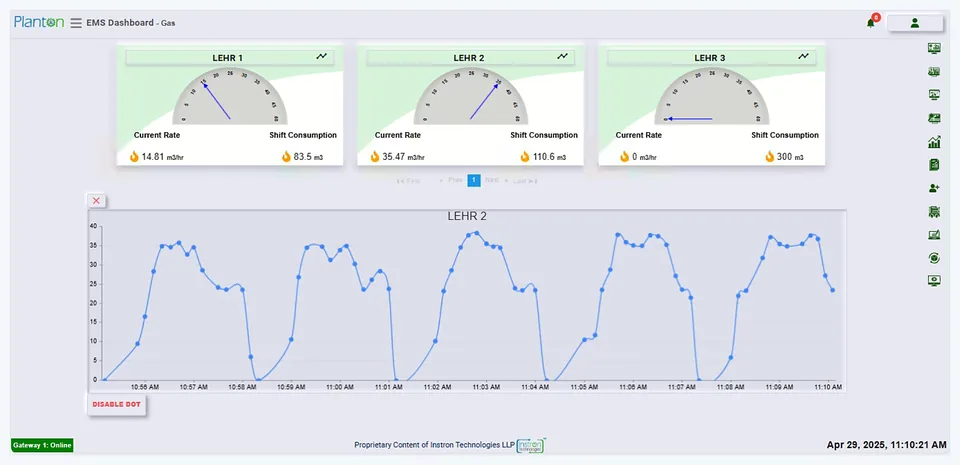
A monthly total can show that a resource increased without identifying the line, batch, area, asset or condition that drove it.
A monthly total can show that a resource increased without identifying the line, batch, area, asset or condition that drove it. Useful utility monitoring begins with measurement boundaries, reliable sources and the production context needed to investigate change.
Technical starting point
A meter may cover more than one process or include ancillary loads. Steam, water, compressed air and electricity can cross physical and reporting boundaries. The first job is to map the source, units, sampling and intended attribution before comparing areas or product runs.
Explore our engineering phases
Technical considerations
Typical scoping questions. The answers shape the scope, deliverables and acceptance criteria for your project.
Record meter type, location, scaling, units, timestamp quality, ownership and areas served.
Connect consumption to batch, campaign, asset, shift, product, throughput or operating state where source data permits.
Explore demand and time trends, period summaries or resource-per-output views when the normalization basis is valid.
Use findings to identify where process review, maintenance, metering, setpoint or control changes warrant further evaluation.
Every project requires a defined technical owner, acceptance basis and a scope proportionate to its operating context.
Scope logic
The aim is to distinguish what is known, what must be engineered and what evidence is needed next.
Define the relevant boundary and check existing data quality.
Join selected resource readings with operating and production information.
Separate observed changes from proven root causes and prioritize engineering action.
Delivery sequence
Contract stages remain separate. Progression from Basic Engineering & Feasibility to Detailed Engineering or Integrated Design & Build is not automatic.
First conversation
A useful first discussion is about the existing basis, the technical uncertainty and the milestone it affects. A complete specification is not required to start clarifying the scope.
Prepare a technical enquiryCommon questions
No. First determine what is already available and whether the measurements answer the intended question.
No. Monitoring can reveal opportunities, but engineering assessment and implemented changes are needed to demonstrate a particular outcome.
Let’s grow together