
01
Model the process states
Agree the definitions for running, blocked, starved, changeover, cleaning, maintenance and planned downtime.
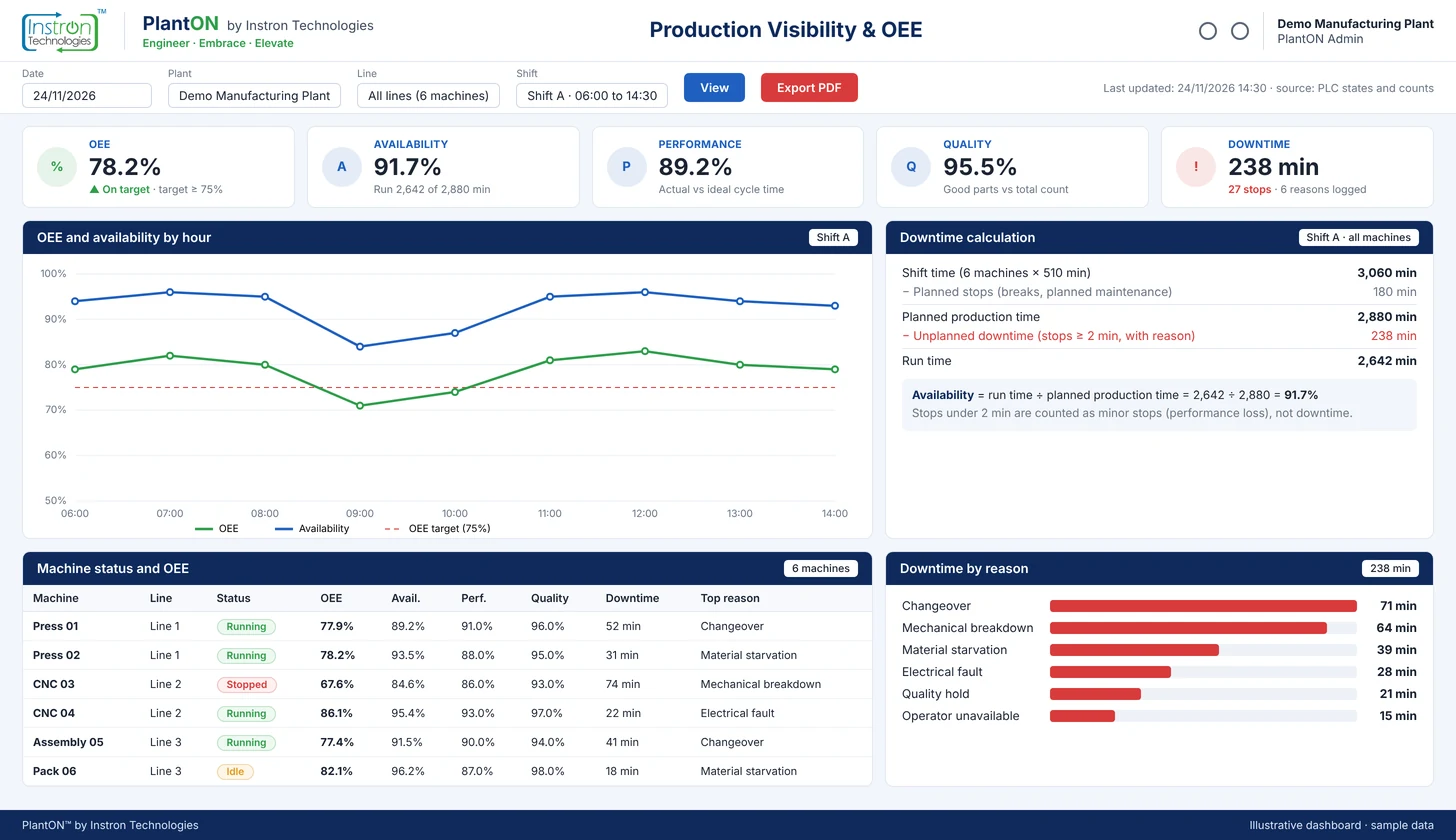
One OEE number can hide disagreement. How running time, planned stops, counts, scrap and downtime are defined decides whether it helps a decision.
Technical starting point
Define the line or asset boundary, production calendar, planned time, machine states, rate basis and quality counts. Confirm data timestamps and ownership before committing to a KPI. Missing or inconsistent source signals should be treated as design work, not hidden by graphics.
Explore our engineering phases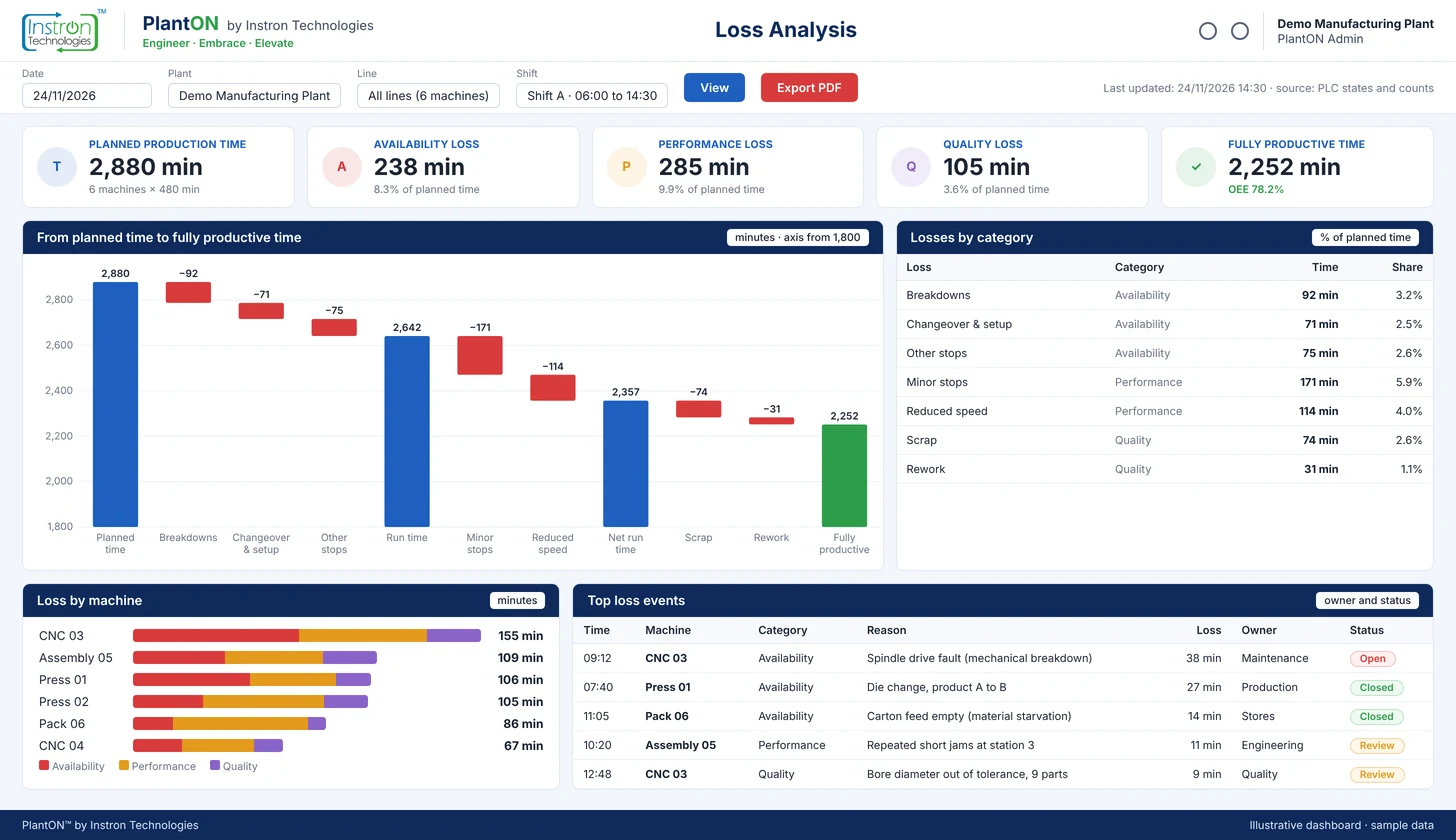
Technical considerations
Typical scoping questions. The answers shape the scope, deliverables and acceptance criteria for your project.
Agree the definitions for running, blocked, starved, changeover, cleaning, maintenance and planned downtime.
Check PLC signals, counts, histories, timestamps, quality inputs and links to product or work-order context.
Use a practical reason model with clear human and automatic inputs. Count planned and unplanned stops separately, treat short stops below an agreed threshold as performance loss, and calculate availability as run time divided by planned production time.
Provide appropriate views for operators, supervisors, engineers and management without forcing one report to serve everyone.
Every project requires a defined technical owner, acceptance basis and a scope proportionate to its operating context.
Scope logic
The aim is to distinguish what is known, what must be engineered and what evidence is needed next.
What the equipment can actually report, and where the critical gaps are.
Clear and agreed rules for availability, performance, quality and reasons.
A limited operating view first, checked against real events before a broad deployment.
Delivery sequence
Contract stages remain separate. Progression from Basic Engineering & Feasibility to Detailed Engineering or Integrated Design & Build is not automatic.
First conversation
A useful first discussion is about the existing basis, the technical uncertainty and the milestone it affects. A complete specification is not required to start clarifying the scope.
Prepare a technical enquiryCommon questions
Possibly. It depends on the availability and quality of states, production counts, schedule, rate basis and quality information.
No. A bounded line or asset group often allows the operating model and data quality to be validated before expansion.
Let’s grow together