Three stages, three questions
Pilot
Does the process work outside the lab?
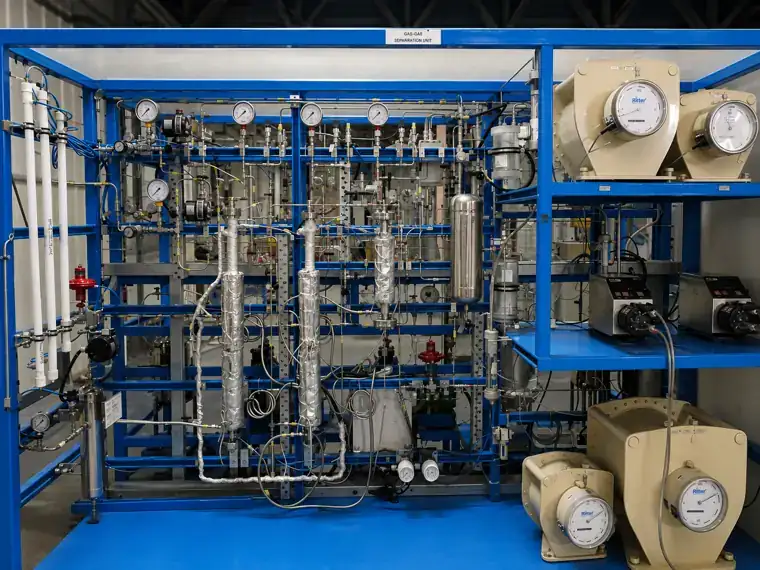
Wide operating ranges, flexible configuration and dense instrumentation, so every run produces data you can compare.
Demonstration
Does it run reliably at a representative scale?
Long runs, recycle streams, maintainability, utilities and operating procedures start to matter as much as the chemistry.
Industrial
Does it pay?
Throughput, yield, energy and solvent use, uptime and compliance decide the design, and cost per unit becomes the test.
The balance comes first
Every stage starts from the same document: the mass and energy balance. It fixes flows, compositions, heat duties and utility loads. From those come line sizes, vessel volumes, heat-exchanger areas and pump and chiller duties. Change a feed ratio late and the equipment list changes with it.
For a pilot, the balance also defines the operating window you want to explore. Design for that range rather than a single point, or the pilot cannot answer the questions it was built for.
What changes as you scale
| Pilot | Demonstration | Industrial | |
|---|---|---|---|
| Main question | Does it work? | Does it run? | Does it pay? |
| Operating range | Wide, to explore | Near the design point | Optimized design point |
| Instrumentation | Dense, for data | For control and diagnosis | For control, quality and utilities |
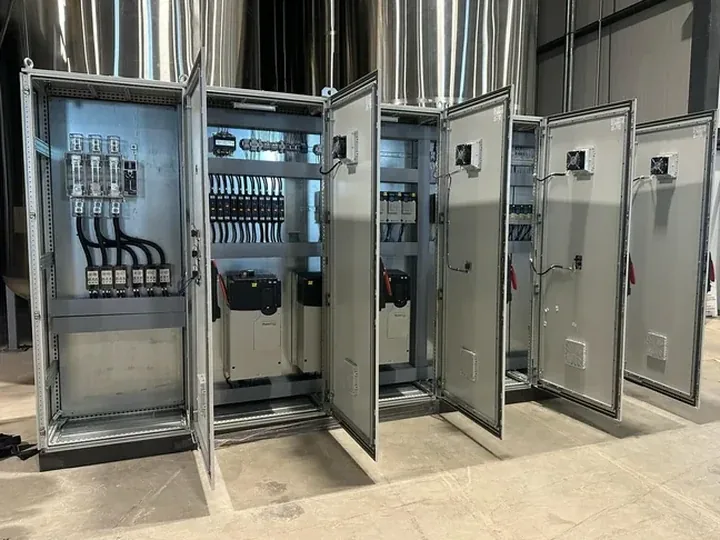
| Automation | Data capture, batch records, interlocks | Sequencing, alarms, longer unattended runs | Full plant control and compliance records |
| Safety | Small inventories, lab-to-plant hazards | Hazardous-area classification and codes | Full site requirements |
| Documentation | Run records and data | Operating procedures, agreed FAT / SAT | Complete handover package |
Data is the real output of a pilot
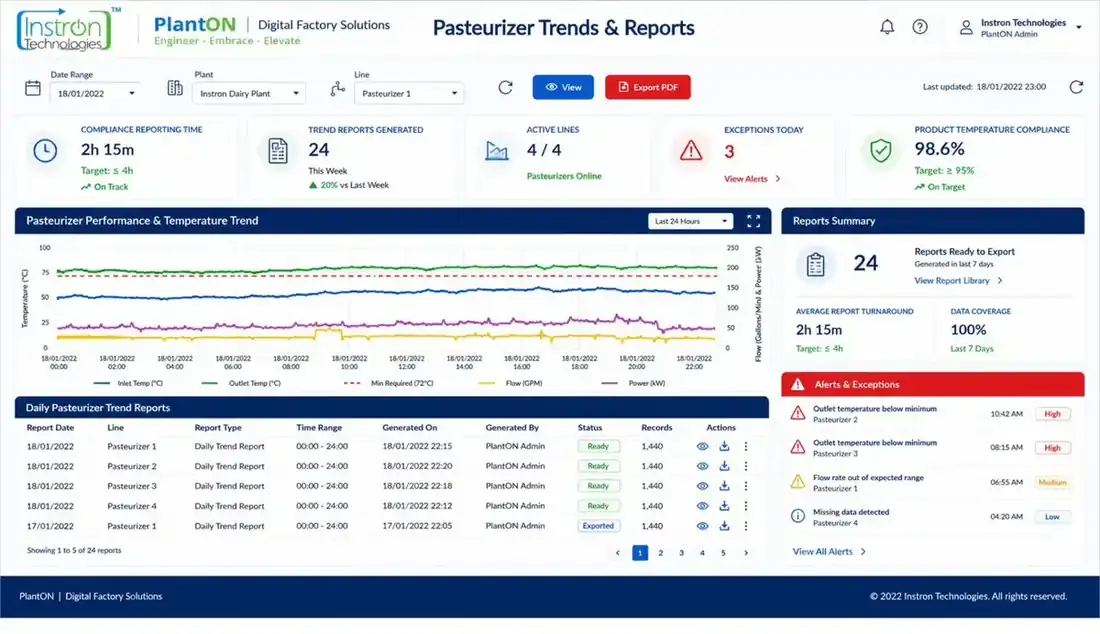
A pilot exists to produce evidence. Without precise control and data capture, results cannot be compared between runs or used to plan the next scale. That is why instrumentation and automation deserve the same attention as the process equipment.
Research institute, Saudi Arabia. Real-time control of ultrasonic energy, temperature and flow, batch records for every run, and a modular design ready to replicate.
Read the case studyRefinery R&D, India. Three instrumented pilots, including CO₂ / H₂ purification at 5 LPH, up to 100 °C and 50 barg, with real-time mass balance and batch reports.
Read the case studyAPI manufacturer, India. A fully automated, unmanned skid in a classified hazardous area, with 17% shorter cycles, 96% solvent recovery and ROI in four months.
Read the case studyDesign each stage for the next one
- Build in modules. A methanol-water recovery system in Mexico was delivered in two parts, a process skid and a distillation tower, and led to a second project with the same customer.
- Keep one data model. Tag names, units and batch records that carry from pilot to demonstration make results directly comparable.
- Agree test scope per project. Some systems can be fully tested as skids before shipping; others can only be proven after installation. Settle FAT and SAT scope early.
- Plan the interfaces. Utilities, drains, vents, power and network, and who owns each one at site.
- Make each stage a decision point. A phased scope lets you stop, change direction or move on with evidence.