01
Distillation and evaporation
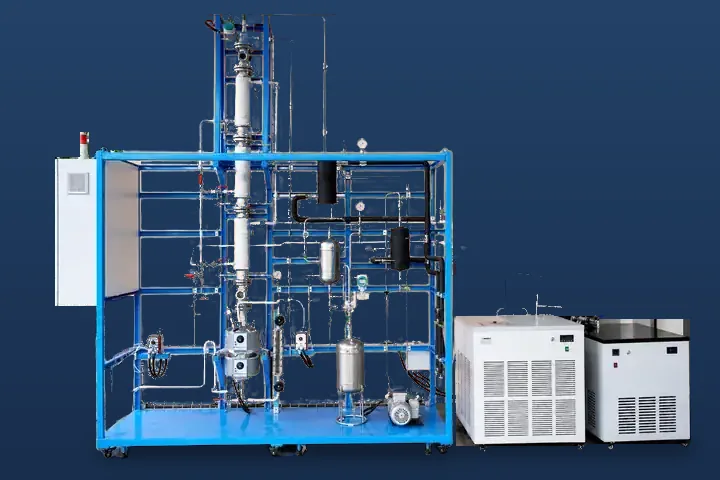
Review heat and material balance, volatility or boiling behavior, reflux, duty, pressure, turndown, fouling, cleaning and utility requirements.
Recovery and purity matter, but so do feed variation, utilities, solvent management, fouling, operator actions and safe operation.
Technical starting point
Define composition, expected variability, target purity and recovery, batch or continuous throughput, and the constraints that shape the route. A laboratory result may support a separation hypothesis without yet defining a reliable recycle or production system.
Explore our engineering phases
Technical considerations
Typical scoping questions. The answers shape the scope, deliverables and acceptance criteria for your project.
Review heat and material balance, volatility or boiling behavior, reflux, duty, pressure, turndown, fouling, cleaning and utility requirements.
Assess partition behavior, selectivity, solvent ratio, contact time, settling, emulsions, interface detection and solvent recovery.
Specify recovered-solvent quality, buildup of impurities, make-up, purge, acceptable losses and compatibility with upstream production.
Define monitoring, interlocks, control of heaters/pumps/valves, materials compatibility and the responsible safety/regulatory review scope.
Every project requires a defined technical owner, acceptance basis and a scope proportionate to its operating context.
Scope logic
The aim is to distinguish what is known, what must be engineered and what evidence is needed next.
Feed, balances, separation objectives and viable operating envelope.
Equipment layout, P&IDs, instrumentation, control philosophy and package boundaries.
FAT and commissioning plans tied to actual recovery, quality and operating behavior where test conditions permit.
Delivery sequence
Contract stages remain separate. Progression from Basic Engineering & Feasibility to Detailed Engineering or Integrated Design & Build is not automatic.
First conversation
A useful first discussion is about the existing basis, the technical uncertainty and the milestone it affects. A complete specification is not required to start clarifying the scope.
Prepare a technical enquiryCommon questions
No. Depending on the feed and objective, separation may involve distillation, extraction, evaporation, membranes, filtration or a combination.
A scoped feasibility or basic engineering engagement can clarify requirements and open decisions; the separation technology itself may require specialist or technology-owner input.
Let’s grow together