01
Existing architecture
Review installed controllers, HMI/SCADA, networks, I/O, drives, package equipment and software or hardware obsolescence.
Replacing an old PLC or SCADA platform is only one part of modernization.
Replacing an old PLC or SCADA platform is only one part of modernization. The installed plant may contain undocumented logic, operator workarounds, mixed equipment, aging instruments and tight shutdown windows. A responsible upgrade starts with that operating reality.
Technical starting point
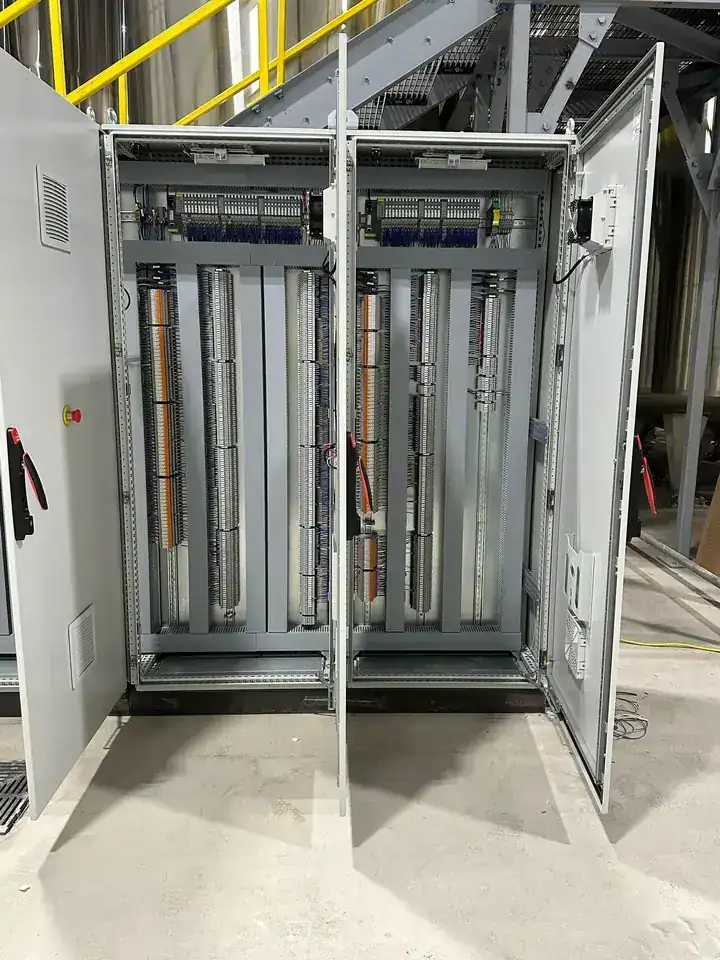
A controls survey should establish what is actually connected, supported and available for a change. Drawings, software backups, network maps and field surveys may disagree. The migration basis needs to account for those differences and any production consequences.
Explore our engineering phasesTechnical considerations
Typical scoping questions. The answers shape the scope, deliverables and acceptance criteria for your project.
Review installed controllers, HMI/SCADA, networks, I/O, drives, package equipment and software or hardware obsolescence.
Decide what remains, what is replaced, whether transition is phased and what temporary operation is permitted.
Include alarms, manual/automatic modes, restart paths, diagnostics, naming standards, backups and supportability.
Document FAT, field checks, shutdown sequencing, rollback options, commissioning responsibility and as-built handover.
Every project requires a defined technical owner, acceptance basis and a scope proportionate to its operating context.
Scope logic
The aim is to distinguish what is known, what must be engineered and what evidence is needed next.
Site survey, source files, control system state and known operational bottlenecks.
Defined interfaces, revised logic/display behavior and test records before plant cutover.
Transition plan, responsible sign-offs, recovery approach and documentation for operations.
Delivery sequence
Contract stages remain separate. Progression from Basic Engineering & Feasibility to Detailed Engineering or Integrated Design & Build is not automatic.
First conversation
A useful first discussion is about the existing basis, the technical uncertainty and the milestone it affects. A complete specification is not required to start clarifying the scope.
Prepare a technical enquiryCommon questions
That cannot be assumed. Some work can be prepared or tested offline, but the need for an outage depends on the physical interfaces, architecture and acceptance plan.
Not always. The operating requirements, safety boundaries and approved change scope should determine what is preserved, improved or retired.
Let’s grow together